

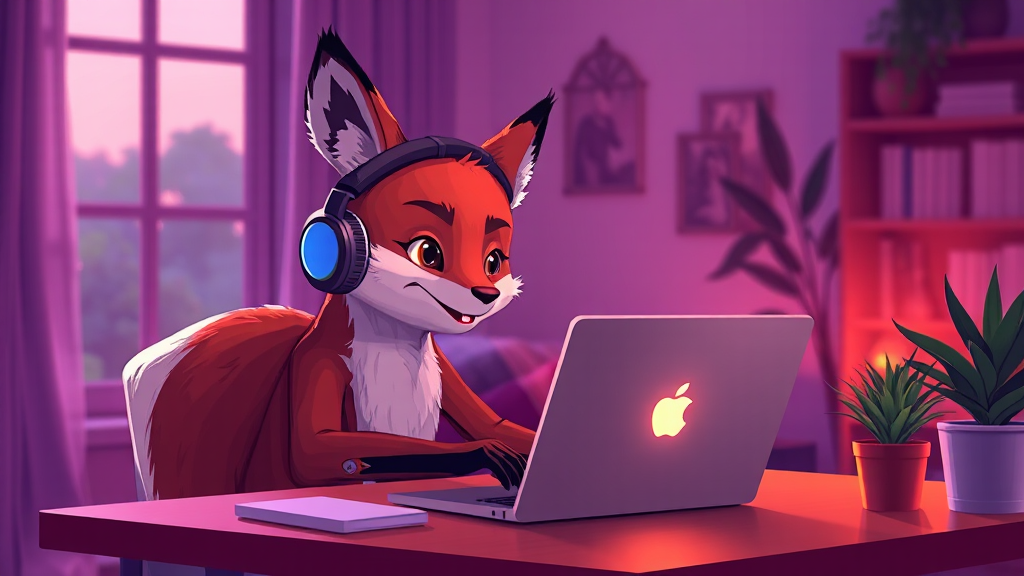
Furry AI Chat: How Anthropomorphic Characters Are Reshaping Digital Conversation
Somewhere between the rise of large language models and the enduring creativity of online subcultures, a new kind of interaction has quietly taken root. People are no longer just chatting with generic assistants named after helpful robots. They are building relationships with characters that have ears, tails, wings, and richly imagined backstories. This is the world of furry ai chat, a space where artificial intelligence meets anthropomorphic storytelling, and where conversation becomes a form of collaborative worldbuilding.
For anyone who has spent time in online fandom communities, the appeal is not hard to understand. Furry culture has always been about identity, expression, and creative play. AI simply gives that culture a new instrument to play with, one that responds in real time and never runs out of patience. But what exactly is furry AI chat, why is it growing so quickly, and what should newcomers know before diving in? Let’s unpack it carefully.
What Exactly Is Furry AI Chat?
Furry AI chat refers to conversational AI systems designed around anthropomorphic animal characters. Instead of talking to a neutral, faceless assistant, users talk to a persona: a fox detective, a dragon librarian, a wolf musician, or a cat who runs a late-night radio show. These characters are usually defined by a profile that includes species, personality traits, speech patterns, background lore, and sometimes visual artwork.</n
The technology behind them is similar to other character-based chatbots. A large language model generates responses, while a character card or system prompt keeps the persona consistent. What makes the furry variant distinct is the cultural layer. Users often bring years of experience with fursonas, roleplay etiquette, and collaborative storytelling. They expect the AI to understand terms like “species,” “sona,” or “fursuit,” and they care deeply about tone, consent, and character integrity.
In practice, furry AI chat can range from lighthearted small talk to long-form narrative roleplay. Some users want a cozy companion to chat with after work. Others want a creative partner to help develop a webcomic, a novel, or a tabletop campaign. The same underlying technology serves both needs, which is part of why the space has expanded so quickly.
Why Anthropomorphic Characters Feel Different to Talk To
There is a psychological reason furry characters resonate in chat settings. Anthropomorphism lets people project complex emotions onto a form that feels safe and approachable. A human stranger asking personal questions can feel intrusive. A gentle deer character asking the same questions can feel curious and warm. The animal framing creates a buffer that makes vulnerability easier.
Researchers who study human-computer interaction have noted that users form stronger parasocial bonds with characters that have clear visual identities and consistent personalities. Furry characters are exceptionally well suited to this because the community already invests heavily in character design. A single fursona might have a color palette, a species, a height, a favorite food, and a detailed history. When that character is paired with a capable language model, the result feels less like a tool and more like a presence.
That sense of presence is not trivial. It affects how long people stay engaged, how openly they share, and how creatively they collaborate. For many users, furry AI chat is less about escaping reality and more about exploring parts of themselves they do not get to express elsewhere.
Common Use Cases Beyond Simple Roleplay
It is easy to assume that character chat is only about fantasy scenarios, but the actual uses are broader and more practical than outsiders expect.
Creative writing support. Authors use furry AI characters to test dialogue, brainstorm plot twists, and explore how a scene might unfold from a non-human perspective. A dragon character might react to a negotiation very differently than a human one, and that difference can unlock new story ideas.
Companionship and emotional check-ins. Some users live in areas without a strong local community. A consistent, kind AI character can provide a low-pressure space to talk through the day. This is not a replacement for human relationships, but it can be a meaningful supplement.
Language and social practice. Because the AI never judges, some users practice conversation, humor, or even a second language with their character. The playful framing reduces the anxiety that often comes with making mistakes.
Worldbuilding and lore development. Writers and game masters use character chat to stress-test their settings. If a character’s backstory contradicts the world’s rules, the conversation will often surface that inconsistency naturally.
Art and content inspiration. Visual artists sometimes chat with a character to clarify its personality before drawing it. The conversation becomes a kind of informal character bible.
How to Choose a Furry AI Chat Platform
Not all platforms handle anthropomorphic characters equally well. Some are built primarily for generic assistant tasks and treat character prompts as an afterthought. Others are designed from the ground up for persona-driven conversation. When evaluating options, a few criteria matter more than marketing copy.
Character depth and memory. A good platform remembers details across sessions. If your character has a sister named Mira and a fear of deep water, the AI should not forget that five messages later. Memory quality is one of the clearest signals of a mature system.
Safety and consent features. Furry communities tend to have strong norms around boundaries. A platform should make it easy to set limits, report problems, and control what kinds of content are allowed. Clear moderation policies benefit everyone.
Customization. The ability to define species, personality, speech style, and backstory is essential. Templates help beginners, but advanced users need room to write detailed character sheets.
Community and discovery. Some users want to browse characters created by others, while others prefer to build in private. Both approaches are valid, and a flexible platform supports both.
Performance and reliability. Long roleplay sessions can strain weaker systems. Response speed, context length, and uptime all affect whether a conversation feels immersive or frustrating.
Writing a Character That Actually Feels Alive
The difference between a forgettable chatbot and a memorable furry AI character usually comes down to the quality of the character definition. A few practical habits help.
Start with a contradiction. Characters become interesting when they hold two traits that do not obviously fit together. A fierce warrior who collects delicate teacups. A shy librarian who writes aggressive punk lyrics. Contradictions give the AI something to play with and make responses less predictable.
Give the character a specific way of speaking. Maybe they use old-fashioned phrases, or they never use contractions, or they refer to themselves in the third person when nervous. Small verbal quirks do more for immersion than long paragraphs of backstory.
Define what the character wants. A character with a goal will steer conversations in interesting directions. A character without one will wait passively for the user to lead every scene.
Leave some gaps. Overly detailed characters can feel rigid. Leaving a few unknowns gives the AI room to improvise and gives the user room to discover the character over time.
The Ethical and Emotional Questions Worth Asking
Any technology that simulates connection deserves honest scrutiny. Furry AI chat is no exception. Supporters point out that it offers comfort, creativity, and companionship to people who may not have easy access to those things. Critics worry about dependency, manipulation, and the risk of replacing real relationships with frictionless ones.
The most balanced view is probably that the tool itself is neutral. What matters is how it is used. If a character chat helps someone process emotions, practice social skills, or finish a creative project, that is a genuine benefit. If it becomes a way to avoid all human contact or to reinforce harmful patterns, that is a problem worth addressing.
Platform design plays a role here. Features like session reminders, transparency about AI limitations, and easy access to mental health resources can help users stay grounded. So can community norms that encourage honesty about what the technology is and is not.
What the Future Might Look Like
The trajectory of furry AI chat points toward richer, more persistent characters. Voice interaction is already improving, and visual generation is becoming fast enough to illustrate scenes in real time. In the near future, a user might speak aloud to their character, see the character’s expression change, and watch a scene illustration appear as the conversation unfolds.
There is also movement toward shared spaces, where multiple users and multiple AI characters interact in the same room. That would bring furry AI chat closer to a live roleplay table, blending the convenience of AI with the unpredictability of human collaborators.
None of this is guaranteed, of course. Progress depends on model quality, safety research, and how communities choose to shape the tools. But the direction is clear: anthropomorphic characters are becoming a permanent part of the conversational AI landscape, not a niche curiosity.
Frequently Asked Questions
Is furry AI chat only for people in the furry fandom?
No. Many users are simply curious about character-driven conversation or want a creative writing partner. Furry themes are central to the experience, but you do not need to identify as a furry to enjoy it.
Can I create my own character instead of using a preset one?
Most platforms allow custom characters. You typically define a name, species, personality, speaking style, and backstory. The more consistent and specific your definition, the more immersive the conversations tend to be.
Are these conversations private?
Privacy policies vary by platform. Before sharing personal details, read the terms of service and look for clear statements about data storage, training use, and deletion options. Reputable platforms make these policies easy to find.
Is furry AI chat safe for younger users?
It depends on the platform and the character. Some systems include age gates and content filters, while others are designed for adults. Parents and younger users should check moderation settings and community guidelines before engaging.
Will the AI remember what we talked about last time?
Memory features are improving quickly, but they are not universal. Some platforms retain context across sessions, while others reset. If continuity matters to you, choose a platform that advertises persistent memory and test it early.
Final Thoughts
Furry AI chat sits at an unusual intersection of technology, fandom, and human emotion. It is part creative tool, part social experiment, and part digital playground. For users who approach it thoughtfully, it can be a genuinely rewarding way to explore character, story, and connection. As the underlying models continue to improve, the line between chatting with a program and collaborating with a character will keep getting blurrier, and that is exactly what makes this space so fascinating to watch.






Leave a Reply