

When Your Drain Still Backs Up: A Plumber’s Troubleshooting Routine for Guarujá Properties
You already poured the drain cleaner, plunged the shower grate, and maybe even snaked the kitchen line with a hand auger you borrowed from a neighbor. The water still rises. That is the moment most people in Guarujá start calling around, and it is exactly where I begin my own diagnostic when I arrive on site. The first thing to understand is that a recurring backup is rarely a single clog; it is usually a symptom of where the blockage sits in the system. If you need a direct line to a team that handles this daily, desentupidora Guarujá is the kind of local service that works these calls every week.
Below is the routine I follow, in order, when a homeowner or building manager tells me they have already tried everything. It is not a list of products to buy. It is a way of reading the symptoms so you stop guessing and stop wasting money on treatments that cannot reach the real obstruction.
Why the Usual Fixes Fail Before You Call Anyone
Most over-the-counter drain openers are designed for a hair clog or a grease film a few centimeters into the pipe. They work by chemical reaction, and that reaction needs contact with the blockage. When the clog is further down, or when the line is already full of standing water, the product gets diluted and never reaches the problem. Worse, repeated use can leave a caustic layer that makes the next technician’s job harder and less safe.
A plunger is a pressure tool. It only works if the rubber cup seals properly and if there is a single, close obstruction. In many Guarujá homes, the shower drain connects to a longer branch line shared with the sink and the floor drain. Pushing down on one fixture can simply move water and debris into the next fixture instead of clearing the line.
The hand auger is the tool that gets people closest to success, but it has a hard limit: cable length and pipe diameter. If your blockage is in the main building line or past a bend the auger cannot negotiate, you will feel resistance and assume the clog is cleared when it is only pushed aside. A backup that returns within a day or two is a sign the obstruction was displaced, not removed.
Reading the Symptoms: Kitchen, Bathroom, or Building Line
Where the water backs up tells you a lot about the scale of the problem. I ask three questions before I open any equipment: which fixtures are affected, does the backup happen only after heavy use, and is there a smell or gurgling in a fixture you are not using.
Single-fixture backups
If only the kitchen sink drains slowly, the blockage is likely in the trap or the short branch serving that sink. Grease and soap scum build up on the pipe wall over months and narrow the passage. A single-fixture problem is usually the easiest to clear, but it is also the one most often ignored until it becomes a full stop.
Multiple fixtures on the same floor
When the shower, the bathroom sink, and the floor drain all drain slowly at the same time, the obstruction is in the branch line that serves that bathroom. This is common in older apartments where the original pipe diameter is small and years of soap and hair have reduced the inner opening.
Backups across floors or at the lowest point
If water rises in a ground-floor drain when someone upstairs showers, or if the lowest drain in the building backs up first, you are dealing with the main building line or the connection to the public sewer. This is the scenario where a hand tool cannot help and where a camera inspection becomes necessary. It is also the scenario most likely to affect neighbors, so it should be treated as urgent.
The Tools That Actually Reach the Blockage
Once I know the scale, I choose the tool by pipe diameter and blockage type, not by what is easiest to carry. There are three main approaches, and each has a specific job.
- Motorized cable machine: a rotating steel cable with a cutting head that breaks through grease, soap, and roots in branch lines. It is the standard tool for interior drains and smaller stacks.
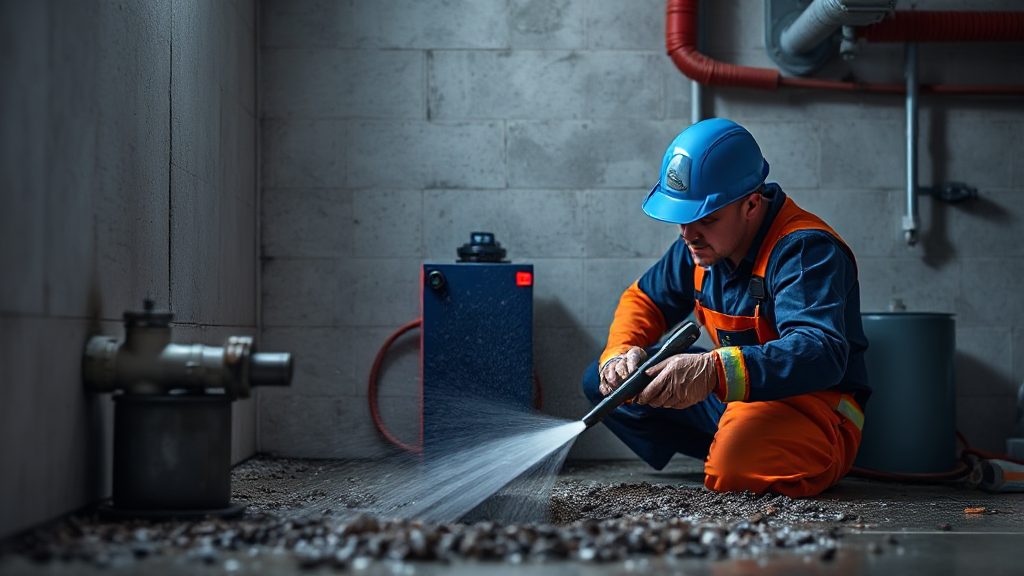
- Hydro-jetting: high-pressure water directed through a specialized nozzle that scours the full circumference of the pipe. It removes the film that cable machines leave behind, which is why it is preferred for grease-heavy kitchen lines and long horizontal runs.
- Camera inspection: a waterproof camera pushed through the line to show the exact location and nature of the problem. It does not clear anything by itself, but it prevents blind work and confirms whether the pipe is intact.
The choice matters because using the wrong tool can damage older pipes. A high-pressure jet in a fragile clay or aged PVC line can cause a rupture. A cable machine in a line with a collapsed section can make the collapse worse. A professional decides the method after seeing the pipe, not before.
What Changes When the Property Is in Guarujá
Guarujá has a mix of older residential buildings, newer condominiums, and commercial properties near the beach that see heavy seasonal use. That mix creates specific patterns. In older buildings, the original cast-iron or clay lines may have root intrusion at the joints. In beachfront rentals, sand and salt-laden moisture accelerate wear on fittings, and short-term rental turnover means a slow drain is often reported only when it becomes a backup.
There is also the practical matter of access. Many buildings in the city have internal shafts and boxed-in pipes, so the technician needs to locate the inspection points before starting. A service that knows the local building stock will ask about the floor plan and the age of the property before dispatching, which saves time on site. If you are comparing options, a desentupidora Guarujá SP team that handles both residential and commercial calls is usually better prepared for these access issues.
Seasonality matters too. The summer months bring more people and more water use, and the lines that were borderline in the low season tend to fail when occupancy rises. If your backup happened during a peak period, the underlying restriction was probably there before.
Step-by-Step: What I Do on Site After a Failed DIY Attempt
When a customer tells me they already tried chemicals or a plunger, I adjust my process to account for what those attempts changed. The steps below are the order I follow, and they are the reason a second visit is rarely needed.
- Confirm the affected zone. I run water at each fixture one at a time and watch where it rises. This maps the blockage without opening anything.
- Locate the cleanout or inspection access. Every properly built line has one. If it is buried or painted over, I find it before inserting any tool.
- Check for standing chemical residue. If drain cleaner was used, I flush and ventilate before working, and I wear the right protection. This is a safety step, not a formality.
- Clear with the appropriate tool. Cable for branch lines and grease, hydro-jetting for full-diameter scouring, and camera confirmation when the line is old or the blockage is recurring.
- Test under load. I run multiple fixtures at once, not just the one that backed up. A line that passes a single-fixture test can still fail when the building is using water normally.
- Report the cause. A cleared drain without an explanation is a temporary fix. I tell the owner what caused it and what to watch for.
That last step is where most DIY cycles repeat. If the cause was grease, the fix is a maintenance habit. If the cause was roots or a broken section, the fix is a repair, and no amount of clearing will change that.
Preventing the Same Backup From Coming Back
After the line is clear, the goal shifts from reaction to prevention. The most effective changes are simple and cost nothing.
In the kitchen, never pour oil or grease down the drain, even with hot water. Let it cool and dispose of it in the trash. Use a strainer in the sink and empty it before it fills. In the bathroom, a hair catcher in the shower is the single highest-impact item you can install. In older buildings, schedule a preventive camera inspection every couple of years, especially if the property has trees near the line or a history of root intrusion.
For building managers, the preventive routine is slightly different. It includes checking the common-area drains before peak season, keeping the cleanout covers accessible, and having a documented contact for emergencies. A desentupidora em Guarujá SP that offers scheduled maintenance can catch a restriction before it becomes a weekend emergency.
One more practical note: if a drain has backed up more than twice in the same year, stop treating it as a clog and treat it as a diagnosis problem. Something in the line is restricting flow permanently, and the only way to know what it is, is to look.
What to Have Ready Before You Call
The call goes faster and the visit is more accurate when you can answer a few basic questions. Have ready: which fixtures are affected, whether the backup happens all the time or only after heavy use, the approximate age of the building, and whether any chemical product was used. If you are in a condominium, know where the main cleanout is and whether the building has a shared line.
That information lets the technician bring the right equipment on the first trip instead of guessing. It also helps you get a realistic expectation of cost, because a single-fixture clear and a main-line hydro-jet are different jobs with different time requirements.
The practical closing action is this: if your drain has already defeated the plunger, the chemical, and the hand auger, stop repeating those steps. Map the symptoms, note which fixtures are involved, and call a team that will inspect before it clears. That single change in approach is what turns a recurring backup into a one-time fix.





Leave a Reply